
English| EUR
Suggested for you
More currencies
Choose a language
Wat Rong Khun enforces strict clothing standards that reflect its status as an active Buddhist sanctuary. Understanding these requirements before arrival prevents entry denials and ensures a respectful visit to one of Thailand's most sacred contemporary temples.
Quick answer
The white temple Chiang Rai dress code requires shoulders and knees covered at all times, with closed-toe footwear mandatory throughout the complex. Tank tops, shorts above the knee, ripped jeans, sleeveless shirts, and sandals are prohibited. Sarongs and cover-ups are not provided at the entrance, so visitors must arrive properly dressed to gain admission to the main ubosot and surrounding grounds.
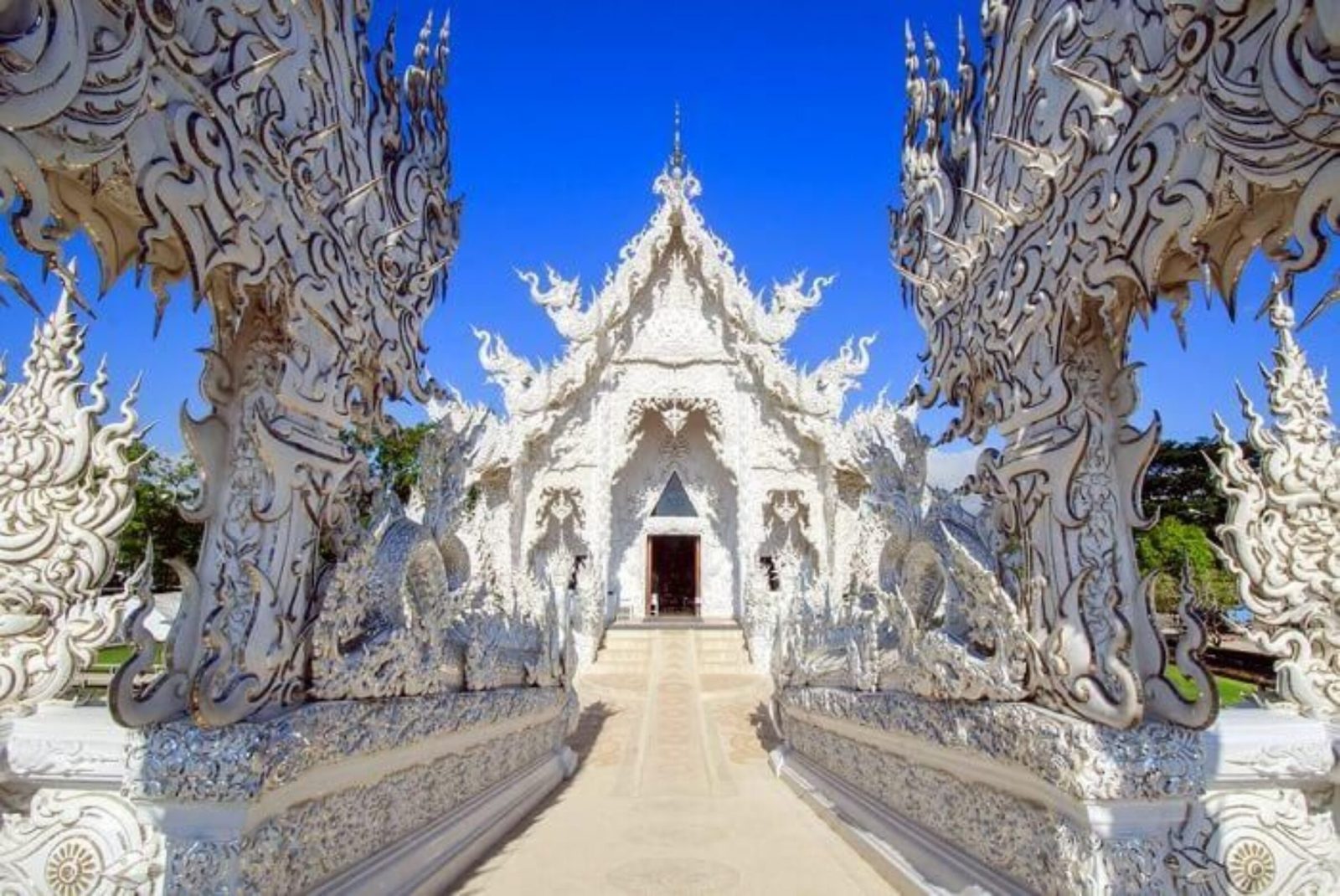
Wat Rong Khun's dress policy is enforced more rigorously than most Northern Thai temples, reflecting artist Chalermchai Kositpipat's vision of the complex as both artwork and sacred space. Guards stationed at the Bridge of Rebirth and ubosot entrance turn away hundreds of visitors weekly for violations ranging from exposed shoulders to torn denim. The white temple Chiang Rai dress code stems from traditional Buddhist monastic rules adapted for a site that receives over 5,000 daily visitors during peak season. Clothing must cover from shoulders to knees without exception—three-quarter sleeves and capri-length pants meet the minimum standard, while full-length garments are preferred. Footwear rules extend beyond the prayer hall: closed shoes are required across the entire complex, including outdoor sculpture gardens and the golden building housing restroom facilities. This differs from typical Thai temple practice, where visitors remove shoes before entering halls but may wear sandals on grounds. Textile restrictions address both modesty and preservation concerns. Sheer fabrics, fishnet materials, and garments with large cutouts fail inspection even when layered. Ripped or distressed denim is rejected regardless of whether skin shows through tears—the aesthetic itself is deemed inappropriate for a consecrated site. Form-fitting athletic wear, yoga pants, and leggings without a covering tunic are similarly prohibited. Hats and sunglasses must be removed before crossing the Bridge of Rebirth, the ornate white span leading to the main sanctuary. Violations result in immediate denial without appeal or temporary covering solutions. The temple does not loan sarongs or wraps, a deliberate policy Chalermchai instituted to encourage intentional preparation rather than reactive compliance. Visitors turned away must return to nearby Chiang Rai town—a 13-kilometer drive—to change clothing. The 200-baht conservation fee is non-refundable for those refused entry, and tickets cannot be used on a different day. Respectful attire signals understanding that Wat Rong Khun functions as an active place of worship despite its museum-like appearance and international fame. Local devotees visit for prayer and merit-making throughout the day, making appropriate dress a matter of religious courtesy rather than arbitrary tourism regulation.
“Guards stationed at the Bridge of Rebirth turn away hundreds of visitors weekly for dress code violations ranging from exposed shoulders to torn denim.”
Wat Rong Khun is an active Buddhist temple where religious customs apply to all visitors. Dress modestly and behave respectfully to honor the sacred space and avoid being denied entry.
The White Temple in Chiang Rai maintains consistent daily operating hours throughout the year.
The best arrival window is 08:00–09:30 to avoid mid-morning arrivals of large tour buses and peak daytime heat. Planning your visit for this early slot ensures a more manageable experience when exploring the temple grounds.
Mild temperatures 20–30°C; peak tourism season.
This period offers the most comfortable weather for walking the grounds. Expect larger crowds throughout the day during these months.
High heat 30–40°C; intense sun exposure.
The heat is significant, making early morning arrivals essential. Humidity levels rise as the season progresses.
Humid with frequent rain; 25–33°C.
Occasional showers often provide relief from the heat. Visitor numbers are generally lower compared to the cool season.
Verdict: Arrive between 08:00–09:30 during the cool season months of November to February for the most comfortable experience.
The White Temple (Wat Rong Khun) is located in the Pa O Don Chai sub-district, south of Chiang Rai city center. Most visitors reach the site by road from Chiang Rai or via organized transit from Chiang Mai.
Highway 1 (Phahonyothin Road) south from Chiang Rai
Direct hire from Chiang Rai city center
Local bus from Chiang Rai Bus Terminal 1
The temple is located at Pa O Don Chai, Mueang Chiang Rai District, Chiang Rai 57000, Thailand. For those arriving from Chiang Mai, private transport or guided tours remain the most efficient way to navigate the 3-hour journey.
Everything you need to know about white temple chiang rai dress code
The white temple chiang rai dress code requires visitors to cover their shoulders and knees at all times. This policy is strictly enforced out of respect for the sanctity of the Buddhist site.
Men must wear long trousers or modest shorts that reach below the knees. Sleeveless shirts are generally prohibited as part of the standard etiquette for this Chiang Rai landmark.
While some casual clothing is acceptable, shorts that show too much leg are discouraged. It is best to wear modest attire to ensure you are granted entry to the temple grounds.
The white temple chiang rai dress code is enforced by security staff at the entrance. Those not in compliance will be denied access to the main white ordination hall until they are properly covered.
Yes, you must cover your shoulders to respect this sacred Buddhist architecture. Lightweight scarves or shawls are often useful to carry for such purposes when visiting Thai temples.
Like many sacred sites, the white temple chiang rai dress code aligns with general standards for Thai religious buildings. Always prioritize modesty over fashion to avoid issues during your visit to these Northern Thai attractions.
Some local shops near the entrance may sell or rent sarongs to visitors who arrive underdressed. However, it is always better to plan your outfit in advance to avoid delays during your tour.